Aylin’s Story
*Content warning, themes of domestic abuse.
From One Survivor to Another: Your Body Belongs to You
One painful experience has stayed with me more than any other. It was an experience that changed my life and shaped the person I am today.
I was 27 years old when my husband and I separated. Two years later, at the age of 29, while we were going through divorce proceedings, the incident that changed my life happened.
At that time, I was trying to navigate the end of my marriage while also being a mother to our two-year-old daughter. I wanted my daughter to have a relationship with her father, so I allowed him to visit her at my home.
One evening, while our daughter was asleep, he became consumed by jealousy. Although we were separated, he believed he still had the right to control my life. He accused me of seeing other men, despite this not being true. He then tried to force himself on me and grabbed my neck when I resisted.
I remember not screaming because I was terrified of waking and frightening my daughter. Through tears, I kept saying, “No. What are you doing?” I managed to push him away, ran into my daughter’s bedroom, and locked the door behind me. Thankfully, he did not come in.
At the time, I did not even recognise what had happened as sexual violence. After the incident, I began experiencing nightmares and struggling with what had happened. I thought this was something I had to accept because we had been married. However, my therapist at NHS Talking Therapies recognised the seriousness of what I had described and, with my safety in mind, the incident was reported to the police. Two female police officers came to my home early one morning, and it was at that moment that I truly began to understand that what had happened to me was not normal.
I realised that being married to someone never gives them ownership over your body. Consent matters in every relationship, including marriage.
As a British woman from a Turkish Kurdish background, I grew up navigating different cultural expectations. In some families and communities, there can be harmful beliefs that a husband has rights over his wife’s body and that a woman should accept things simply because she is married. Deep down, I knew that this did not align with my values or with the woman I was raised to be. I now understand that these beliefs are not love or tradition—they are forms of control and can be part of abuse.
From one survivor to another: your body belongs to you. You always have the right to say no. No one—not a husband, partner, or former partner—is entitled to your body without your consent. No one has the right to control your body, silence your voice, or make you feel that you do not have a choice. You deserve to be treated with dignity, respect, and compassion.
Domestic abuse is not only physical violence. It can also be emotional, psychological, verbal, financial, and sexual. Many survivors carry invisible wounds that can be just as painful as physical injuries. Every form of abuse deserves to be recognised, believed, and taken seriously. Women who experience non-physical forms of abuse deserve the same compassion, support, and understanding as those who experience visible violence.
My hope is that by sharing my story, another woman will recognise the signs of abuse sooner than I did and know that she is not alone. There is help available, and it is possible to rebuild your life.
Sharing my story is also my way of saying to every woman who is living in fear: you are stronger than you realise, you are not alone, and there is hope. Reaching out for help was one of the hardest decisions I ever made, but it was also the most important. It changed the direction of my life. Within just one year of leaving, I achieved things I once thought were impossible.
None of the life I have today would have been possible without Solace. Their compassion, guidance, and unwavering belief in me gave me the strength to leave, protect my daughter, and rebuild our lives. With their support, I was able to access housing support and secure temporary accommodation through Barnet Council, giving my daughter and me the safety and stability we desperately needed.
I am no longer the young woman who felt trapped and believed there was no way forward. I am a survivor, a mother, and a woman who has found her voice again.
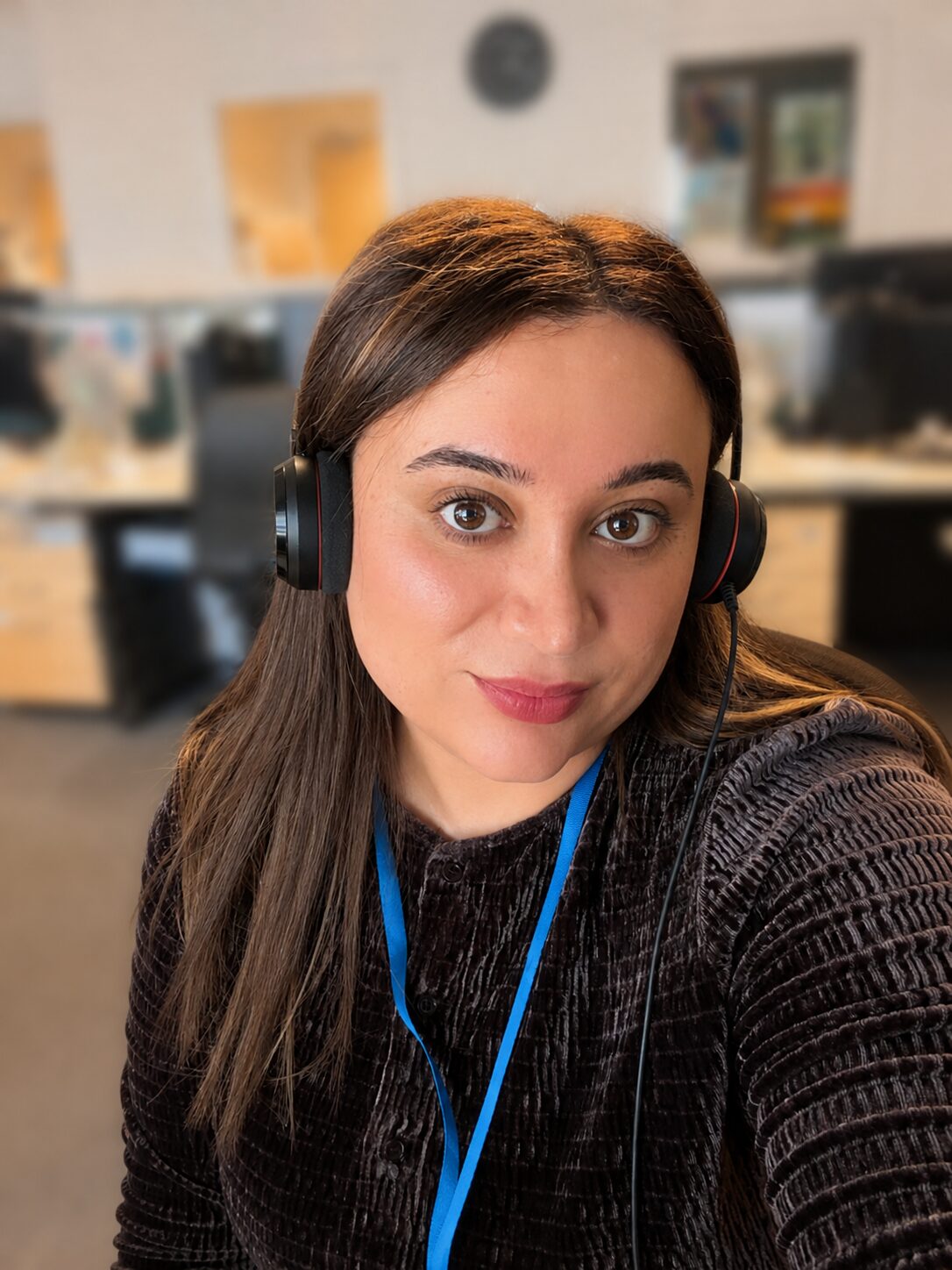
Today, I am raising my daughter in a safe home, working as a professional Turkish community interpreter, volunteering with Citizens Advice, and pursuing a career in English language teaching. Most importantly, I now have the opportunity to support other women—to empower them through language, knowledge, and access to information, just as others once empowered me.
The journey has not been easy. Since leaving, I have faced many challenges, including navigating divorce proceedings, child arrangements proceedings, ongoing mental health and financial struggles, and a Section 204 housing appeal. However, despite these difficulties, I have continued to move forward, overcome challenges, and create a safe and positive future for my daughter and myself.
I am soon starting to volunteer as an English teacher with a women’s charity that supports women who have experienced domestic abuse. Being able to use my own journey, my language skills, and my experiences to help other women find their voice is something that means so much to me. To know that I can use one of the most difficult experiences of my life as a source of strength to help and empower others is incredibly meaningful.
Solace did not just help me survive. They helped me believe that my future could be different. They gave me the opportunity to transform my life, create a happier future for my daughter, and support other women on their own journeys.
Looking back, I am deeply thankful to my therapist at NHS Talking Therapies, whose support helped me recognise the abuse and take my first steps towards safety and recovery. I am also grateful to the two female Metropolitan Police officers from Enfield who came to my home that morning. They treated me with kindness, dignity, and compassion at a time when I was frightened and confused. Their professionalism helped me understand that what had happened to me was a crime and that I deserved to be protected and heard. I would also like to acknowledge Barnet Council for acting quickly to provide temporary accommodation, giving my daughter and me immediate stability and a secure foundation from which to move forward.
I would also like to acknowledge the Greater London Authority and the Mayor of London for supporting opportunities that enabled me to pursue education.
Above all, Solace will always hold a special place in my heart. They helped me believe that my future could be different, gave me the strength to rebuild my life, and empowered me to help other women rebuild theirs.
Their compassion and belief in me helped me rediscover my strength and inspired me to extend that same compassion to others.